Avoiding adverse selection in mortgage lending

Lessons in climate risk from the Draft Combine.
In the competitive arena of retail banking, adverse selection in climate risk poses a silent threat to lenders' portfolios.
The economic principle of adverse selection arises from information asymmetry, where some parties in a market have superior knowledge, enabling them to make better decisions at the expense of others. In mortgage origination, it manifests through competition among banks: those with advanced insights can select premium assets, leaving rivals with inferior ones.
As climate change escalates, failing to analyse climate risk at the point of loan origination exemplifies this. Banks that skip this step disadvantage themselves, allowing competitors to back the loans tied to low-risk properties while they inherit high-risk ones.
To grasp this, consider the NBA Draft Combine as an analogy for the mortgage market's ongoing "selection process."
Adverse selection, in essence, disadvantages uninformed participants in a multi-buyer scenario.
When multiple buyers vie for the same opportunities, those with better information secure the highest-quality options, degrading the pool for everyone else. In lending, banks act as buyers, competing to underwrite loans backed by properties of differing climate quality. Traditional asset writing assessments cover creditworthiness, but climate risk—encompassing hazards like floods, fires, or storms—adds a crucial layer. Without evaluating it upfront, a bank risks building a portfolio skewed toward vulnerabilities, as savvier competitors avoid them.
The NBA Draft Combine vividly illustrates this dynamic.

Annually, the league assembles top rookie prospects for standardised tests: 40-meter sprints, shooting accuracy, and vertical leaps, where athletes jump to flip pegs on a high board.
Crucially, scouts from all 30 teams gather in one room, observing and recording data simultaneously. This levels the playing field, allowing apples-to-apples comparisons. Each scout notes metrics like jump height that indicate athletic ability, ensuring no team misses out on shared intelligence.
Imagine your team's scouts deciding not to show up to the combine.
These uninformed teams will be drafting players based on incomplete or outdated info, while rivals armed with fresh data—jump heights, sprint times—snap up talents like a prime Zion Williamson or Ja Morant.
Fans would be outraged: Why forfeit such accessible advantage? More critically, by abstaining, your team hands competitors an edge. They select stars destined for success, leaving your squad with prospects prone to injuries or underperformance. Over drafts, this snowballs: rivals amass championship rosters, while yours cycles through mediocrity.
Apply this to mortgages.
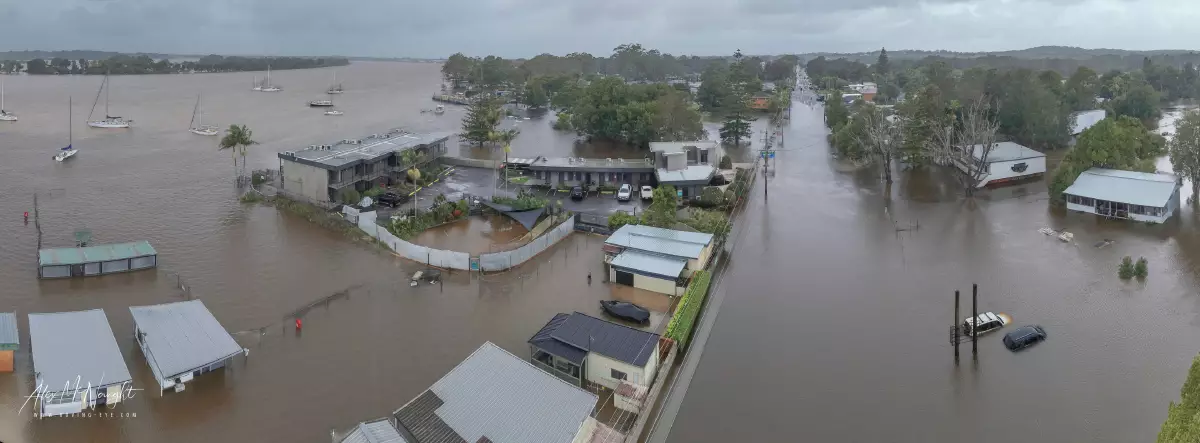
The housing market runs a perpetual "combine" as homebuyers seek financing from competing banks. Properties (the prospects) are evaluated for loan approval based on criteria like borrower income and appraisals. But climate risk introduces a game-changing metric: A home's exposure to future hazards, modeled via geospatial data and projections.
Banks that incorporate this at origination identify resilient assets—say, properties outside of flood zones or away from bushfire-prone areas.
These informed lenders "draft" wisely: approving low-climate-risk loans, repricing, reducing appetite or declining others.
Meanwhile, banks neglecting climate analysis approve blindly, often ending up with the remnants—homes in hazard-prone areas likely to suffer damage, devaluation, or insurance gaps.
As events like Australia's 2022 floods or U.S. hurricanes intensify, these portfolios face elevated defaults. Borrowers in risky spots grapple with repairs or falling values, triggering credit events that hit the bank.
Over time, just as with the example of our uninformed NBA team above, adverse selection compounds: higher provisions, regulatory pressures under frameworks like APRA's CPG 229, and ultimately higher credit losses.
The mechanism is clear: Competition drives the disparity. Once a critical mass—say, 50% of the market, including majors like NAB with its Home ID database assessing 15 million properties—adopts climate analysis, non-adopters are systematically disadvantaged. They select from a depleted pool of quality assets, as peers have already claimed the best.
Mitigating this requires proactive integration.
Begin with foundational steps: geospatial enablement using tools like G-NAF IDs for precise geospatial intelligence. Hazard mapping and climate analysis now and into the future with physical risk models. Understand transmission mechanisms—how climate damage flows through insurance, equity, to debt. Develop metrics like event probability, loss estimates, and thresholds (e.g., reject loans exceeding certain risk scores, akin to LVR caps). Embed these into origination workflows for risk-based pricing and approvals.
Pioneers show the way: in Australia, NAB is the clear gold standard with their comprehensive Home-ID database to inform decisions. Others such as CBA are not far behind, exploring additional climate-focused data points in credit assessments. For others, scalable solutions like AI-driven insurance checks (e.g., Coverproof AI from Sustain 2050) ensure ongoing mitigation without overwhelming costs.
In 2025, amid AASB S2 disclosures, banks must "attend the combine" every day —analyze climate at origination—or choose to adversely select the worst climate quality assets.
By embracing climate risk analysis at the point of origination, lenders not only evade adverse selection but foster sustainable portfolios and resilient economies. The competition is fierce; equip your team to win.
Sustain 2050 is a risk consultancy based in Australia that helps banks manage climate risk in lending.